
I've Been Doing This a Long Time. And I Still Find It Remarkable.
Twenty-five years in mental health. Four years in private practice. And the thing that still gets me is watching someone realize — sometimes for the first time — that they're not the problem. The problem is the problem. That shift changes everything.
In-person in Brownsburg (west Indianapolis metro) + telehealth across Indiana

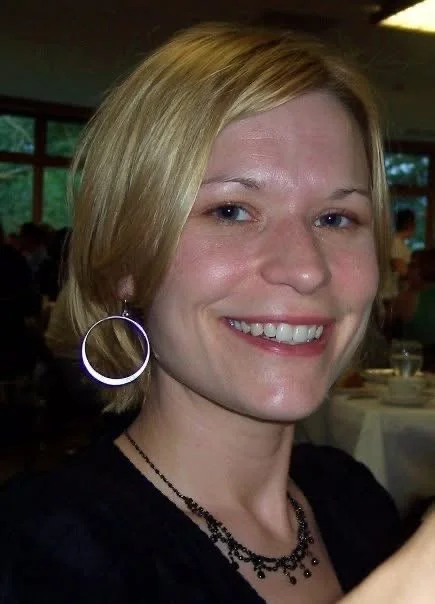
I didn't come to this work through a neat, tidy origin story.
I came to it the long way — through community mental health, palliative care, training and supervision, years of sitting with people in some of the hardest moments of their lives.
Twenty-five years of that shapes you. It teaches you that people are remarkably resilient and remarkably hard on themselves, often in the same breath. It teaches you that most people who come to therapy don't need to be fixed — they need to be understood. And then supported in understanding themselves.
Four years ago I opened Innisfree Counseling in private practice. That was intentional. I wanted to work with a smaller caseload, go deeper, and actually know the people I was working with — not rush through a full schedule of 45-minute slots and hope something landed.
I'm now building my practice in the Indianapolis area, seeing clients in person in Brownsburg (just west of the city) and via telehealth anywhere in Indiana. If you're reading this from across the state, that's very much an option.
I kept noticing something with certain clients: they understood why they struggled. They could articulate it clearly, even insightfully. And that understanding wasn't moving anything. That's what brought me to IFS — and to ACT. Because understanding alone isn't always enough. Sometimes you need a different entry point altogether.
Two approaches — and why they work together.

Internal Family Systems (IFS)
IFS works with the parts of us that carry wounds, protect us, criticize us, shut us down. It doesn't treat any part of you as the problem — it treats every part as having a role, a reason, a history.
For the people I work with — especially around trauma, anxiety, and self-understanding — that reframe turns out to be quietly profound. I spent a long time in more traditional therapeutic frameworks, and they work. But for certain clients, understanding alone wasn't moving anything. IFS was the tool that actually started to shift things.

Acceptance & Commitment Therapy (ACT)
ACT is less about changing your thoughts and more about understanding your relationship to them — which tends to be a better entry point for minds that don't respond well to "just think differently."
I find it especially well-matched for the ADHD and anxiety work I do. ACT helps you move toward what actually matters, even in the presence of difficulty — rather than waiting until the difficulty goes away.

CBT, woven in where it's useful
Cognitive Behavioral Therapy has solid evidence behind it, and I still use it. Practical tools for managing thoughts, building structure, and catching spirals before they take the whole afternoon. I don't hand you a worksheet and call it a day — I use it alongside the deeper work when it's the right tool.
I hold an MSW from Indiana University and an MFA in Creative Writing from Warren Wilson College. That combination surprises people sometimes. But it makes sense for the work I do: narrative matters. The story you've been telling yourself — about who you are, what you're capable of, what your past means — is never the only story available.
The full range of hard things — with a soft spot for the weird ones.

Creative people
People who feel things deeply and sometimes wish they didn't — with a voice inside nudging them toward the path less traveled, who just need a little help building the confidence to take the risk.

Sensitive people
People who've been told their whole lives they have "so much potential" and are quietly exhausted by that.

Intellectual people
People who suspect there's more to them than the hard thing they've been carrying, and want to find it.
Weird people, honestly. I say that with the utmost respect.
The people who don't quite fit the standard mold — who process the world differently, move through it differently, love differently — those are my people. Embrace your weirdness; it's what makes you wonderfully unique. The parts that don't fit neatly are usually the most interesting and capable parts of you — and I'll help you appreciate them for what they are.
I work with adults, individually. Anxiety, depression, trauma, ADHD, grief, life transitions — the full range of the hard things that bring people to therapy. I should also be straightforward about what I'm not the right fit for: couples therapy, severe or active addiction, active suicidality or self-harm, or ADHD testing and formal diagnosis. If that's what you're looking for, I'll do my best to point you toward someone who can help.
No one-size-fits-all agenda. Just a real conversation about you.
I'm in the process of building my caseload in the Indianapolis area after years in the Lafayette, Indiana community mental health world. If you're in the Indy metro — or anywhere in Indiana — I'd love to connect.
If Any of This Sounds Like Your Kind of Therapist
Reach out and we'll set up a free consultation call — no commitment, no paperwork, just a real conversation about where you are and whether working together makes sense. I follow up personally. No bots, no automated systems, just me.
Book a Free Consultation →